Note from the CEO
Dear friends,
We are anticipating 2027, filled with ambition and resolve. We are investing in the future of California agriculture by growing a community of impact investors committed to affordable loans that support regenerative and organic farming, housing for farmers and farmworkers, sustainable fishing practices, and economic opportunity for small businesses.
Our multi-media Learning Centers, launched in July, have already been used by hundreds of farmers and business service providers and will feature prominently in our upcoming business courses. Read more about our courses below. This fall we’re launching new online tools to support clients in applying for loans, enrolling in courses and accessing land and business assistance. All of this is in service to FarmLink’s vision for healthy and resilient food systems in California.
On behalf of the FarmLink team, thank you for your involvement in our work. We appreciate you, and if you appreciate our work, please consider giving today.
Warmly,
Reggie Knox
CEO
Table of Contents
Facing high land costs, Longer Table Farm navigates expansion

Despite estimates that more than 10% of winegrape acreage is to be retired in Sonoma County, land values remain unchanged. When Longer Table Farm, located near Sebastopol, aimed to expand its acreage, ideally through purchase, they reached out to more than a half dozen organizations. Ultimately they were able to access 34 acres near Talmage, just south of Ukiah, with lease-to-own financing and support for organic transition.
Owned and operated by Will Holloway and Gina Strathman, Longer Table Farm plays a key role in Sonoma County’s food system. In a recent interview, Will explained that he’s a first-generation farmer, having started working at a cousin’s winery before launching the farm ten years ago on 10 acres leased from the City of Santa Rosa.
Over the past decade, they left behind their early chicken production and have settled into a 80/20 allocation of space for vegetables and flowers, respectively. The flowers, Will said, “are very high labor and touch, but when it goes well, it's pretty astounding what you can do on a small bit of land.” For the last seven years, Will added, their only limit to growing sales has been their ability to produce more. “We've really maximized our site here.”
As the business grew, Will explained, it became risky to operate without long-term land tenure. “It starts to affect your ability to get appropriate financing,” Will explained. The lease with the city has historically been stable, with small farmers leasing the land for more than 25 years, but the terms are short. California FarmLink staff have advised on their leases over the years, and while the arrangement has been stable, the terms were no longer sufficient as the sole source of land tenure for a growing business.
Their plans are to maintain the current lease while expanding on the 34 acres near Talmage, with more affordable land, in part to maintain their six to eight year-round employees. The farm employs about twice that number in the high season, and Gina completed FarmLink’s Employment Resilerator™ this year. Reflecting on their growth, Will reflected, “It has escalated to be quite a meatball.”
Secure land tenure was a major factor in their decision to expand, but there was also what Will describes as the “economy-of-scale squeeze.” Their labor costs were increasing because the cost of living is increasing and insurance costs have grown exponentially. “We saw that we employ more people than we need in the winter just to be able to keep good staff,” Will explained, “because staffing has become such a challenge. We make a deliberate choice to take a financial hit…because we can't be staffed correctly in the summer if we don't keep those people [in the winter].” The leased ground isn’t well-drained and difficult to work in the winter and shoulder seasons, which limits their options. They recognized that they could do better with more space, incorporate more cover cropping, and allow the soil to rest for longer periods.
For several years, Will recognized that the only restriction on sales was the ability to produce. “Once I realized the growth potential for the business, and where we were bottlenecked, and that we could increase our production without having to increase our staffing, [with] strategic crop planning and pushing seasons out a little bit,” Will explained, “I saw real potential. Once I got serious about that, I talked to a lot of different organizations.”
In fact, he talked to more than a half dozen organizations. Ultimately Dirt Capital Partners arranged to buy a 34-acre former vineyard outright, with buildings and other infrastructure to support Longer Table’s packing and storage. As Will explained, “We lease it on a 10-year lease, with purchase options starting at year five. It's not cheap. It's about the equivalent of a 7.5% interest-only deal [and it’s] a triple-net lease, but the payments start out smaller and increase as we go. That allows us to have easier cash flow, get off the ground, build some equity, and get the business up and running.”
They anticipate that the biggest impact of the new acreage is allowing them to produce more in early spring, and grow more lower-dollar crops. “That might sound counterintuitive," Will said, “but because we've been space constrained, the way I've been crop planning for the last few years is based on what produces the most dollars per foot per day it's in the ground. We need a diversified market table to make it interesting for customers.” Will wants to bring back products that generally store well, like cabbages, onions, potatoes, and hard squash.
Having been certified organic from the beginning, it was not very difficult to add another parcel to their certification. The last application of prohibited substances on the 34 acres was in 2024. With the required three-year transition period, their new ground will be certified organic in February 2027. They received assistance from Community Alliance with Family Farmers’ Organic Transition Program, which closed its applications last year. It was part of USDA’s Transition to Organic Partnership Program (TOPP), through which California Certified Organic Farmers (CCOF) accessed and distributed funding to farm organizations, including FarmLink.
The funding supported vital investments for Longer Tagle Farm’s organic production: 240 tons of organic compost, 120 tons of gypsum, and three tons of potash. They were able to pay a contractor to spread the materials and perform subsoil tillage to address highly compacted soils resulting from 50 years of vineyard operations.
In their search for land, organic certification was a critical factor. Sustaining three years of cash flow without organic certification would have been difficult. “We sell a lot of our vegetables into the grocery market,” Will said, ”so we can say everything we want about how good we're doing at farming, but really, the value comes from that USDA [organic] stamp.” Their customers can look forward to garlic and other winter crops in the spring.
To purchase products from Longer Table Farm, find them at three farmers markets: Healdsburg on Saturdays, and San Rafael on Thursdays and Sundays; as well as through Good Earth Natural Foods in Fairfax and Mill Valley, Oliver’s Markets in Cotati, Santa Rosa, and Windsor; FEED Cooperative; and the Sonoma County Flower Market.
Resilerador Laboral™ Returns to Salinas in 2027
Following a successful inaugural cohort this year, in 2027 we’re bringing back El Resilerador Laboral™, the Spanish-language version of The Employment Resilerator™. Designed for Resileradores, graduates of El Resilerador™, the course helps agricultural employers deepen their understanding of employment best practices and build stronger, more resilient businesses.
More than 18 participants took part in the first offering, exploring topics such as labor laws, payroll and compensation, hiring and retention, workplace safety, and communication. Through practical instruction and conversations with fellow farmers, participants explored ways to strengthen their employment practices and create safer, more supportive workplaces.
Participants emphasized the importance of understanding labor laws to protect both their businesses and their workers. As one participant reflected, it is important not only to protect a small business: “pero también es muy importante cuidar el derecho de los campesinos.”
The upcoming six-week course will build on these topics. Classes will take place in person in Salinas, every Wednesday from January 27 through March 3, 2027, from 4:00 to 7:30 p.m. Experienced instructors familiar with the unique challenges facing farmers will lead the sessions.
We look forward to supporting Resileradores as they put these lessons into practice and continue building stronger, more resilient farm businesses. Learn more about the course here.
Policy Matters

The Resilient Food System Infrastructure (RFSI) Project
Since 2024, Roots of Change, with support from the California Department of Food and Agriculture, has been gathering input from communities across California for an upcoming report about resilient food system infrastructure. They organized 20 public meetings in urban and rural communities to understand priorities for creating more resilient food systems. The ultimate goal is to expand capacity for the aggregation, processing, and distribution of locally and regionally produced foods. It’s an opportunity to create more equitable access to markets for farmers, ranchers, and fishers.
With our SolarFresco™ program, we support food system infrastructure with a transition to climate-smart cooler technology for small-scale farmers. We see farmers as innovators committed to the wise use of resources, and we believe that off-grid, solar-powered coolers can play a key role in supporting more resilient food systems.
The RFSI Project is hosting two webinars to introduce their new food system infrastructure mapping tool and dashboard. We encourage you to join: Options include Wednesday, November 4 at 2pm and Thursday, November 12 at 11am.
California’s Agricultural Land Equity Task Force receives Award of Excellence
In early October, the Agricultural Land Equity Task Force received an Award of Excellence from the California chapter of the American Planning Association. The Task Force was created by the California Legislature in the 2022 Budget Act. With 13 members, including Liya Schwartzman, Senior Program Manager, Equity and Conservation on Working Lands, they worked for more than three years gathering input and ideas. They shared policy recommendations with the Legislature and Governor in December 2025. Click here to learn more about the Task Force’s vision to expand equitable access to ag land.
Vote Today | Build momentum for tomorrow!
For the past couple of election cycles, Farm Aid’s Vote for Farmers! Guide has been a valuable voter resource for farmers and advocates. One section that’s timely: “Once candidates are elected, stay in touch.”
Bookkeeping in Practice Returns in 2027: A QuickBooks Online Course for Resilerator Graduates
Strong financial systems are essential to building a resilient farm, ranch, or fishing business. When costs rise and markets shift, understanding your numbers can help you make informed decisions, manage cash flow, and plan for the future with confidence.
Bookkeeping in Practice returns in January 2027 to help Resilerator™ and Resilerador™ graduates strengthen their bookkeeping skills and build more effective financial systems for their businesses.
Taught by Frances Andrews, a bookkeeper with firsthand farm business experience in California, this eight-week virtual course provides practical training in QuickBooks® Online, with a focus on the financial tools and workflows that matter to agricultural businesses. Participants learn how to organize their chart of accounts, create accurate lists of assets, track income and expenses, complete reconciliations, and better understand financial reports. Group sessions and individualized bookkeeping support help participants put what they learn into practice.
The 2026 course evaluations reflected the value of this specialized training: 88% of course participants said they were satisfied or very satisfied with the course. Participants valued learning about bookkeeping in an ag context and using practical tools they could apply to their own businesses.
As one participant shared, “having a class focused on bookkeeping related to farming has been gold.” Another participant credited the course with helping their business get a stronger start on the documentation needed for a loan application.
The course runs from January 11 through March 1, 2027, with weekly sessions on Mondays from 12:00 to 1:30 p.m. PST on Zoom.
If you’re a Resilerator™ or Resilerador™ graduate ready to build confidence in your bookkeeping and strengthen your business’s financial foundation, we encourage you to learn more and apply by November 20.
Pathways to Farmland: California FarmLink on the Shared Roots Podcast
Access to farmland and financing remains a significant barrier for many farmers, particularly those navigating traditional lending requirements and an increasingly competitive land market. In a recent episode of the Shared Roots Podcast, Brett Melone, Chief Credit Officer, and Katia Carranza, Senior Program Associate with the Equity & Conservation on Working Lands (ECWL) team, explored how more equitable approaches to land access and agricultural lending can help address these challenges.
Brett and Katia highlighted the importance of looking beyond conventional measures of readiness and recognizing the potential of ag businesses. Their conversation reinforces an important principle: strengthening the future of agriculture requires more than connecting farmers with land or capital. It means building the relationships, resources, and support systems that allow farmers and agricultural communities to thrive for generations to come.
Tune in to the episode here.
The Shared Roots Podcast is an agricultural storytelling and educational podcast produced by the Asian Culture and Media Alliance (ACMA) in San Diego as part of UC Agriculture and Natural Resources’ California Ag Land Equity project.
Introducing Sprout: California FarmLink’s New Website Chatbot
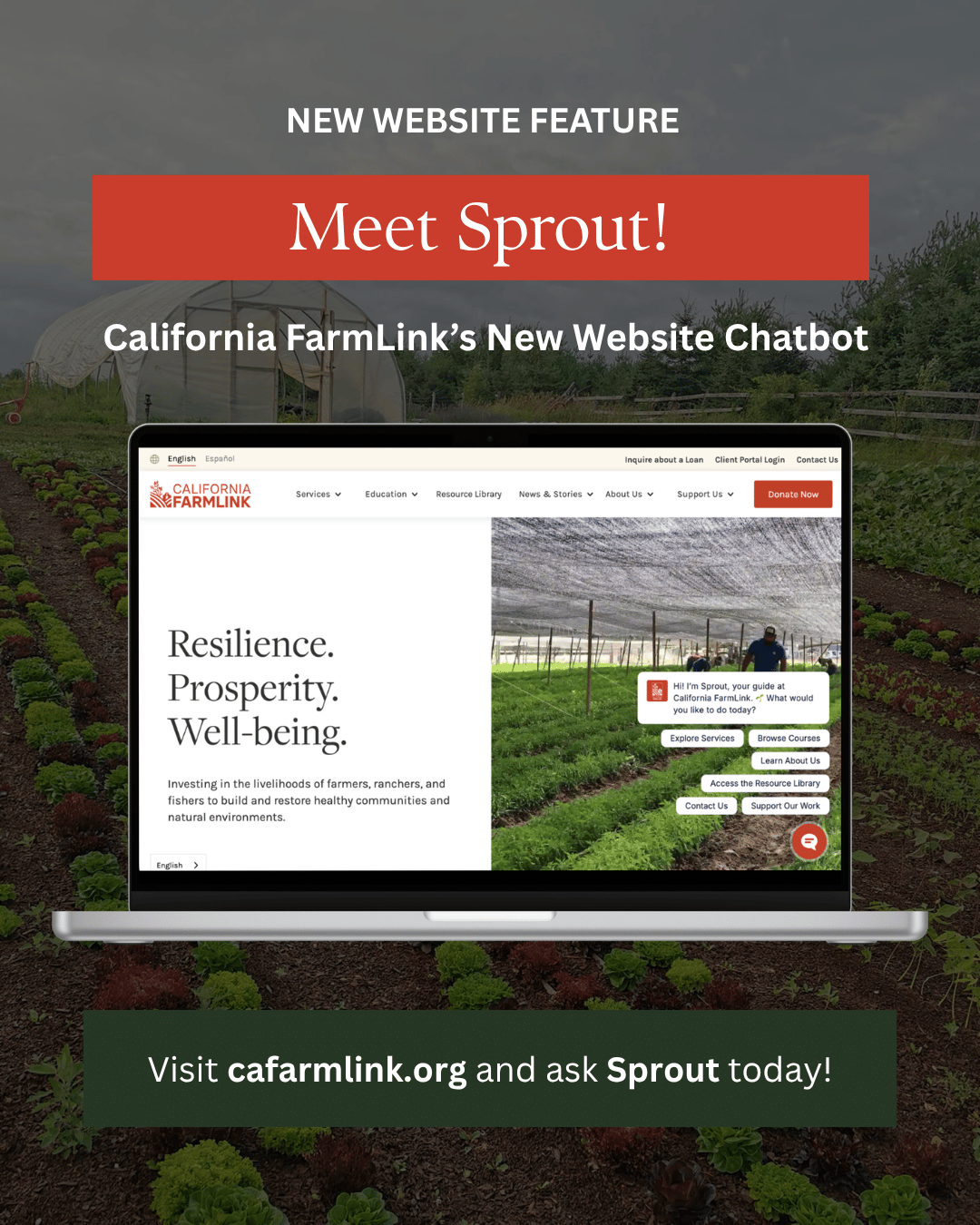
Finding the right resources to support your agricultural business is about to get easier! We have launched Sprout, a new chatbot on our website designed to help farmers, ranchers, and fishers learn more about our work.
Powered by Capacity, Sprout is available in both English and Spanish, offering a convenient way to get answers to questions about California FarmLink and explore resources available to support your business. Whether you’re looking to learn more about our lending programs, business assistance, or land access and other services, Sprout will guide you toward relevant information. The chatbot is only able to access information on the website.
We’re excited to introduce this new tool to make accessing information easier and more convenient for the communities we serve. Ask Sprout a question today in English or Spanish!
California FarmLink CEO Reggie Knox Joins Akiptan Board
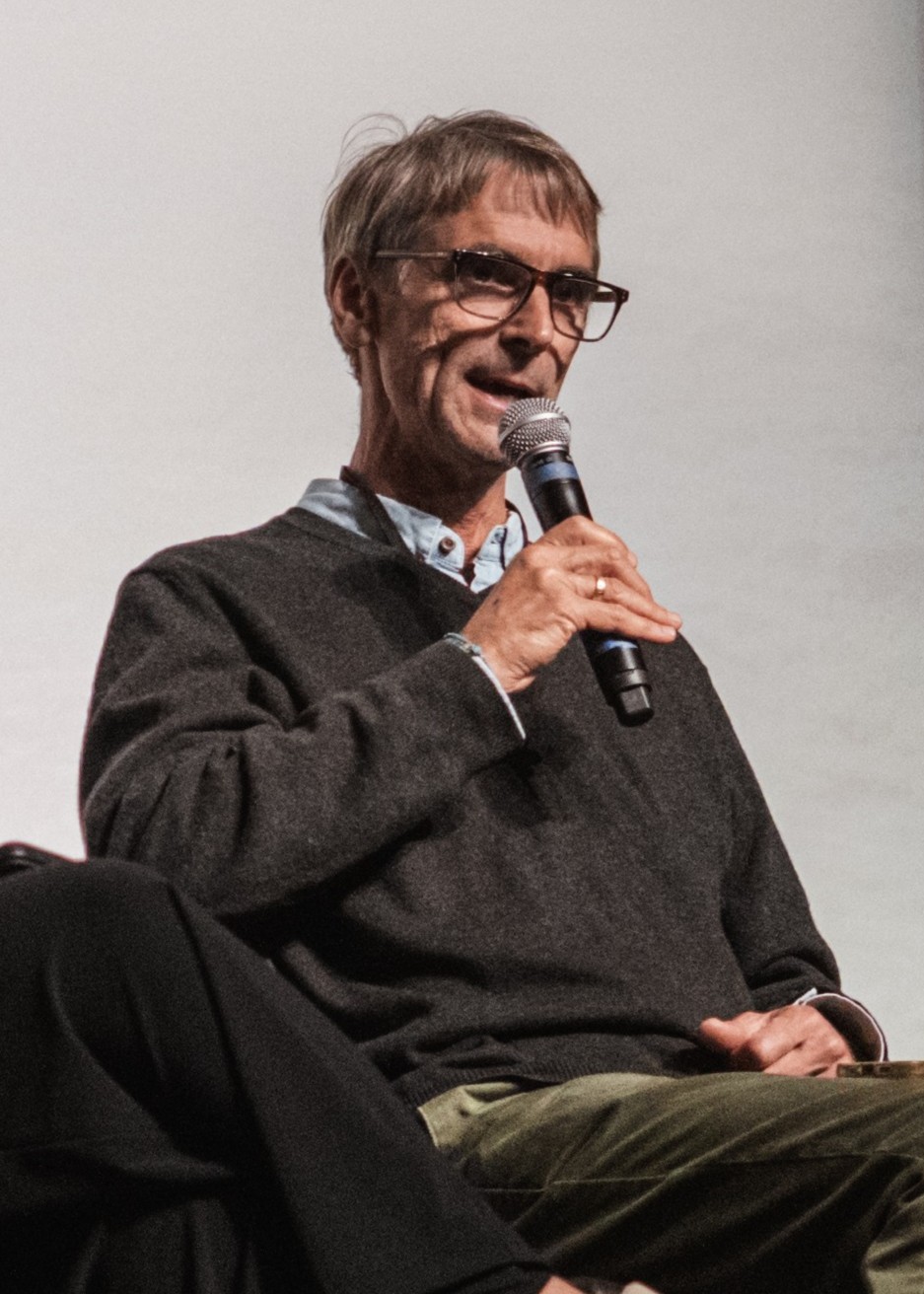
We’re pleased to share that Reggie Knox will become a member of Akiptan’s Board of Directors. Akiptan is a nonprofit Community Development Financial Institution dedicated to supporting Native American agriculture through culturally grounded financial services and resources.
Reggie’s appointment reflects the importance of collaboration in building a more equitable and resilient agricultural economy. At FarmLink, Reggie leads efforts to expand access to capital, land, and educational resources for farmers and ranchers, helping agricultural communities build long-term financial stability.
“I’m so honored to join the Akiptan board and support their work and their amazing team led by Skya Ducheneaux,” Reggie said. “I’ve watched enthusiastically since the organization started in 2018, became a CDFI in 2020, and grew rapidly. FarmLink has intersected frequently with Akiptan’s staff, to compare notes and share learnings, as the only two CDFIs in the country whose primary focus is to serve farmers and fishers.”
We are excited to see Reggie bring his experience and perspective to Akiptan and contribute to its work supporting Indigenous farmers and ranchers. This opportunity strengthens connections between organizations committed to advancing equity, supporting rural communities, and ensuring that farmers have the resources they need to succeed.
Nov 6 Deadline for CA NRCS Funding Applications

The USDA Natural Resources Conservation Service (NRCS) offers technical and financial support for farmers’ conservation practices. The deadline for California farmers and ranchers is November 6th for the Environmental Quality Incentives Program (EQIP), Conservation Stewardship Program (CSP), Regenerative Pilot Program, and more.
FarmLink provides discounted conservation loans to help you bridge the cash flow to launch a project successfully. They’re designed to expand access to these programs. Reach out to our loan team with questions, and plan to visit your local NRCS this week. Learn more here.
Transition to Organic Webinar Series Starts November 5
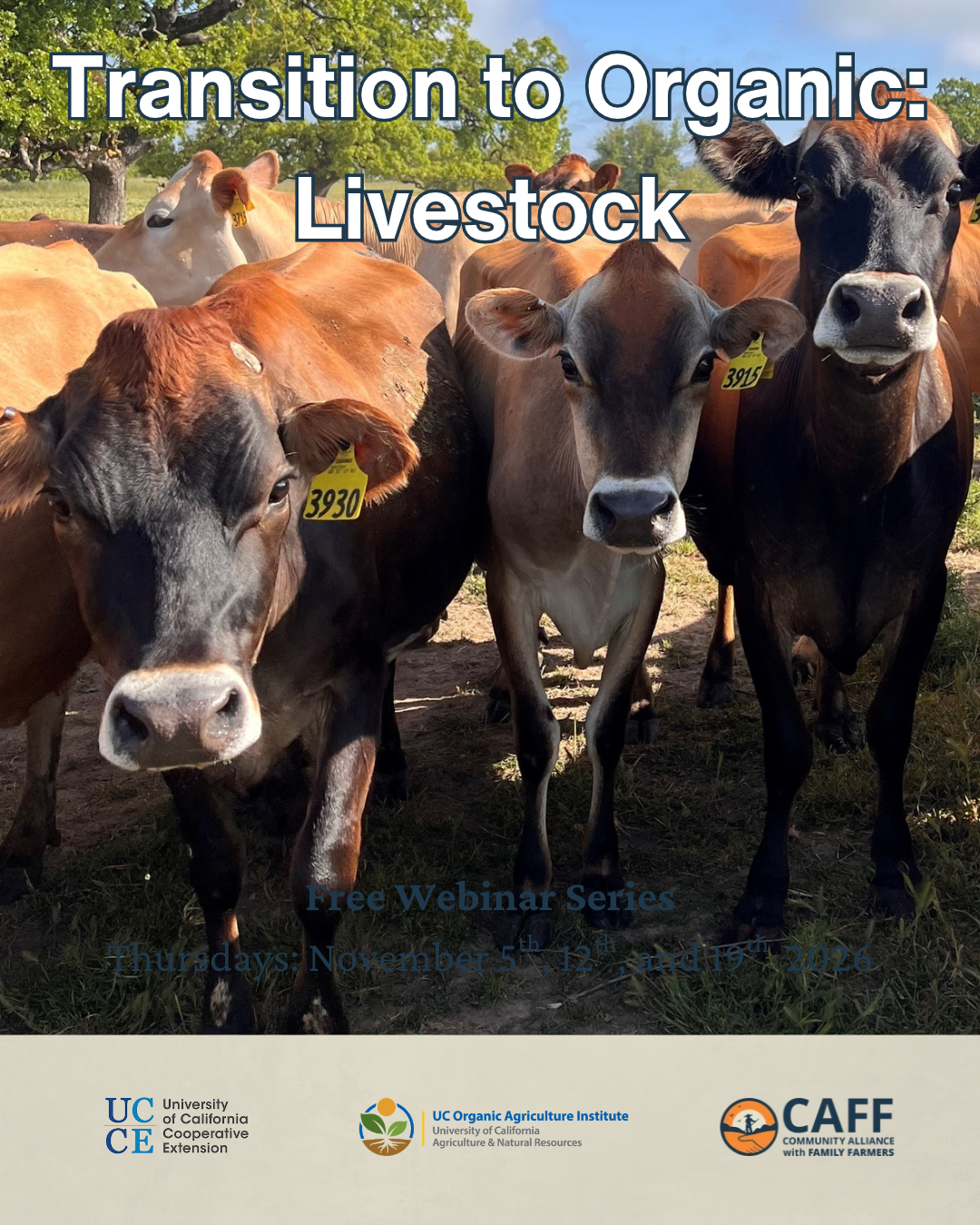
Thursdays, November 5–19, 2026 | 12:00–1:15 p.m. | Free virtual series
Hosted by CAFF, the UC Organic Agriculture Institute, and UC Cooperative Extension (UCCE)
Thinking about transitioning your livestock operation to organic? Join CAFF and its partners for a free, three-week webinar series designed to help livestock producers navigate the transition to organic.
Each session offers practical guidance from UC specialists, experienced farmers, and technical assistance providers. Topics will cover organic certification, recordkeeping, market access, inspection preparation, and the economic considerations of transitioning to organic.
Spanish interpretation will be available at every session.
Session Topics
- November 5: Livestock Producers’ Perspectives on Transitioning to Organic
- November 12: Certification Requirements, Organic System Plans, and Choosing a Certifier
- November 19: Should You Go Organic? Livestock Economics, Marketing, and Processing Considerations