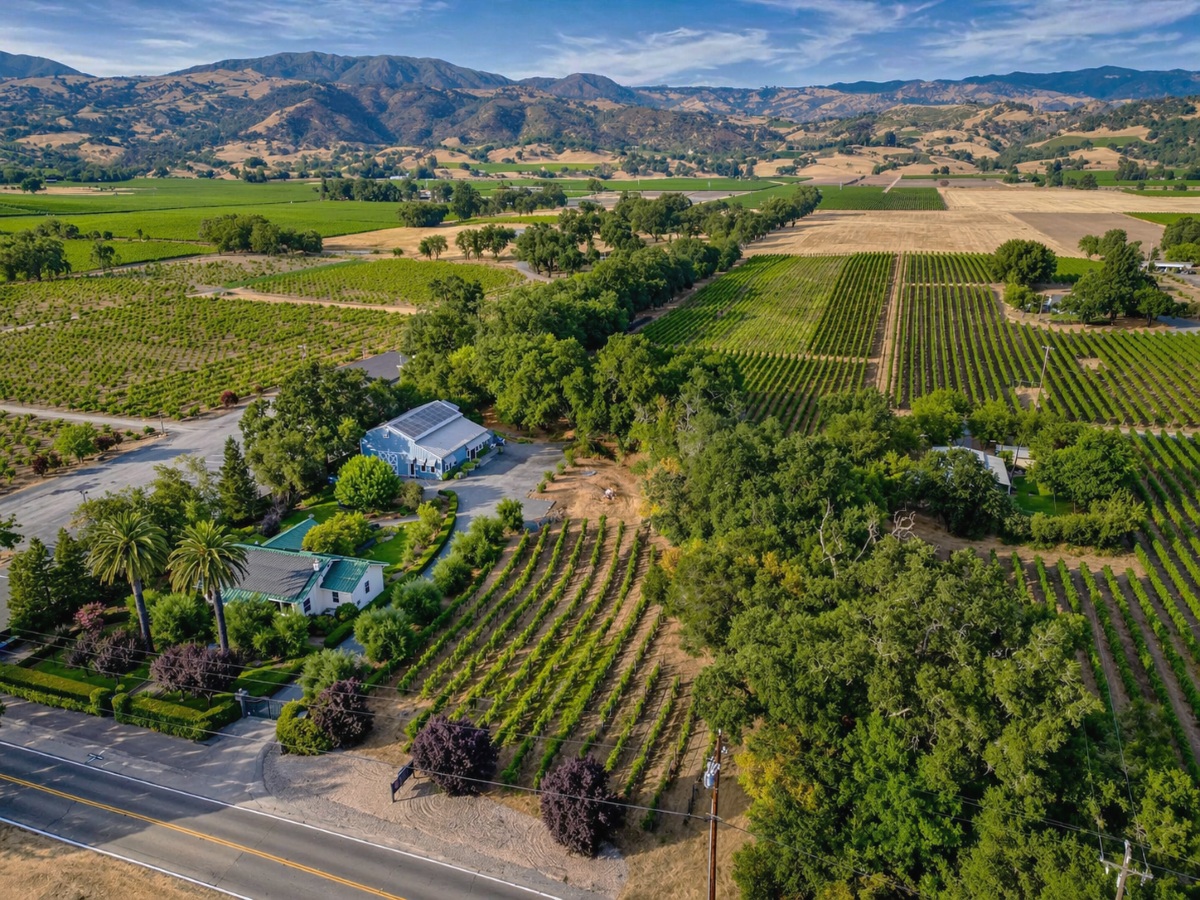
Creating quality, affordable housing is a fundamental challenge throughout California. Housing for farmers and farmworkers can be even more difficult than accessing land. Three years ago we began exploring how to support and finance housing for family farms, and it proved to be one of our most challenging innovations ever. We continue to learn and build partnerships for these new loans, and soon we will announce two farmworker housing loans for projects in the San Joaquin Valley and North Bay regions.
“Our farmer clients and advisors were clear that there is little support for small and mid-scale farms trying to navigate small-scale developments of one to five units,” said Reggie Knox, CEO. “Most farmworker housing projects are driven by larger farms bringing workers in under the H2A visa program. No one is out there working with smaller farmers.” When we combined our farm lending knowledge with a landscape analysis by an MBA student group, it became clear that we could develop solutions. “We love to learn at FarmLink, and we’re not afraid to embrace complexity,” Reggie explained. “We hire people interested in tackling problems and with the support of our funders and investors, we are breaking things down, and going one step at a time.”
Much of our work on housing was developed by Noah Strouse, Senior Loan Officer and Strategic Initiatives Manager. In a recent interview, he outlined what farmers are looking for, how FarmLink can meet the need, and what it took to get to this point. Describing the scope of the challenge, Noah said, “Housing lending is a challenging ecosystem as evidenced by the fact that housing is such a huge political and economic issue everywhere in California. The fundamental challenge is that housing is too expensive, so how do you finance something that's too expensive?”
To meet the need for access and affordability, Noah and the team defined several options. “We can identify quality modular housing to lower the cost of the units,” Noah reported. “We can try to lower the cost of capital by sometimes being able to provide below-market rates. We can provide capital where others won't.” Another way to address the challenge is by structuring our loans to be patient with repayment and maximize flexibility for the borrower. For example, Noah added, “If it's a construction project, we can do a construction-to-permanent loan to make the project pencil out. This could include interest-only payments for the construction period, so it's more affordable, and then it converts to a 30-year mortgage once the housing is built.”
We’re also working on alternative housing strategies. “There is a whole spectrum,” Noah said, “and community land trusts are one important alternative that attempts to remove the speculative value of land…and protect the affordability of properties in perpetuity.” Housing co-ops are another tool that may help improve affordability. Sweat equity construction, typically in partnership with established housing programs, can significantly reduce the cost of construction.
When farmers approach us, they often ask about zoning and land use. Do you know if I can build a house on my farm? Currently our team has to respond, “Sorry, we don't know for certain.” Our ability to scale up housing loans will depend on being able to provide technical assistance and support for pre-development planning. Zoning and land use defines everything, and unfortunately can be a non-starter.
FarmLink is currently working on two loans in partnership with non-profit housing organizations, and two other projects are underway for single family construction on client’s farms. Both farmers received land loans, and years later asked for help building a house or expanding housing on the property. They may have a successful land loan, and don't want to lose their interest rate by refinancing. We can often work out a structure where people keep the original loan alongside a loan for housing.
When farmers approach us about housing loans, we need to understand everything about the business the same as for any other kind of loan. That includes, Noah said, “Collateral, cash flow, production records, you name it. The things that are distinct for a housing loan depends on the kind of housing project. If it's construction we want to know how far along they are in the permitting process and do they have plans with an architect. Have they already identified a contractor and have they received a construction budget?”
“We’re discovering the best roles for FarmLink to play, and who the best partners are to make our vision happen,” Reggie said. There are housing finance programs available on both the state and federal levels, and FarmLink can combine them with impact capital and philanthropy. Reggie concluded, “We just need to get in there, add value to those sources of capital, and continue to learn from the process.”
To learn if a housing loan is right for you, or how you can help make them possible, contact us.