Note from the CEO

Our team at FarmLink is motivated by learning and creating. Our educational curriculum and courses evolve and improve every year in response to the needs of California’s farming, ranching and fishing communities. Our loan team is constantly innovating – developing new loan products to better serve client needs – from loans that address conservation and climate change to new farmer and farmworker housing loans. This newsletter focuses on these innovative educational opportunities and lending efforts.
As a non-profit organization we are focused first and foremost on having a positive impact on the businesses and communities that we serve. In addition to building new programs and loan products, we are also tooling up to increase our impact in public policy and systemic change. We are proud to share our recently published Policy Principles developed over the last year, linked in the article below.
Warmly,
Reggie Knox
CEO
Table of Contents
Innovating for more impact: Farmer and Farmworker Housing Loans

Creating quality, affordable housing is a fundamental challenge throughout California. Housing for farmers and farmworkers can be even more difficult than accessing land. Three years ago we began exploring how to support and finance housing for family farms, and it proved to be one of our most challenging innovations ever. We continue to learn and build partnerships for these new loans, and soon we will announce two farmworker housing loans for projects in the San Joaquin Valley and North Bay regions.
“Our farmer clients and advisors were clear that there is little support for small and mid-scale farms trying to navigate small-scale developments of one to five units,” said Reggie Knox, CEO. “Most farmworker housing projects are driven by larger farms bringing workers in under the H2A visa program. No one is out there working with smaller farmers.” When we combined our farm lending knowledge with a landscape analysis by an MBA student group, it became clear that we could develop solutions. “We love to learn at FarmLink, and we’re not afraid to embrace complexity,” Reggie explained. “We hire people interested in tackling problems and with the support of our funders and investors, we are breaking things down, and going one step at a time.”
Much of our work on housing was developed by Noah Strouse, Senior Loan Officer and Strategic Initiatives Manager. In a recent interview, he outlined what farmers are looking for, how FarmLink can meet the need, and what it took to get to this point. Describing the scope of the challenge, Noah said, “Housing lending is a challenging ecosystem as evidenced by the fact that housing is such a huge political and economic issue everywhere in California. The fundamental challenge is that housing is too expensive, so how do you finance something that's too expensive?”
To meet the need for access and affordability, Noah and the team defined several options. “We can identify quality modular housing to lower the cost of the units,” Noah reported. “We can try to lower the cost of capital by sometimes being able to provide below-market rates. We can provide capital where others won't.” Another way to address the challenge is by structuring our loans to be patient with repayment and maximize flexibility for the borrower. For example, Noah added, “If it's a construction project, we can do a construction-to-permanent loan to make the project pencil out. This could include interest-only payments for the construction period, so it's more affordable, and then it converts to a 30-year mortgage once the housing is built.”
We’re also working on alternative housing strategies. “There is a whole spectrum,” Noah said, “and community land trusts are one important alternative that attempts to remove the speculative value of land…and protect the affordability of properties in perpetuity.” Housing co-ops are another tool that may help improve affordability. Sweat equity construction, typically in partnership with established housing programs, can significantly reduce the cost of construction.
When farmers approach us, they often ask about zoning and land use. Do you know if I can build a house on my farm? Currently our team has to respond, “Sorry, we don't know for certain.” Our ability to scale up housing loans will depend on being able to provide technical assistance and support for pre-development planning. Zoning and land use defines everything, and unfortunately can be a non-starter.
FarmLink is currently working on two loans in partnership with non-profit housing organizations, and two other projects are underway for single family construction on client’s farms. Both farmers received land loans, and years later asked for help building a house or expanding housing on the property. They may have a successful land loan, and don't want to lose their interest rate by refinancing. We can often work out a structure where people keep the original loan alongside a loan for housing.
When farmers approach us about housing loans, we need to understand everything about the business the same as for any other kind of loan. That includes, Noah said, “Collateral, cash flow, production records, you name it. The things that are distinct for a housing loan depends on the kind of housing project. If it's construction we want to know how far along they are in the permitting process and do they have plans with an architect. Have they already identified a contractor and have they received a construction budget?”
“We’re discovering the best roles for FarmLink to play, and who the best partners are to make our vision happen,” Reggie said. There are housing finance programs available on both the state and federal levels, and FarmLink can combine them with impact capital and philanthropy. Reggie concluded, “We just need to get in there, add value to those sources of capital, and continue to learn from the process.”
To learn if a housing loan is right for you, or how you can help make them possible, contact us.
Simplify Tax Season with the Tax Toolshed
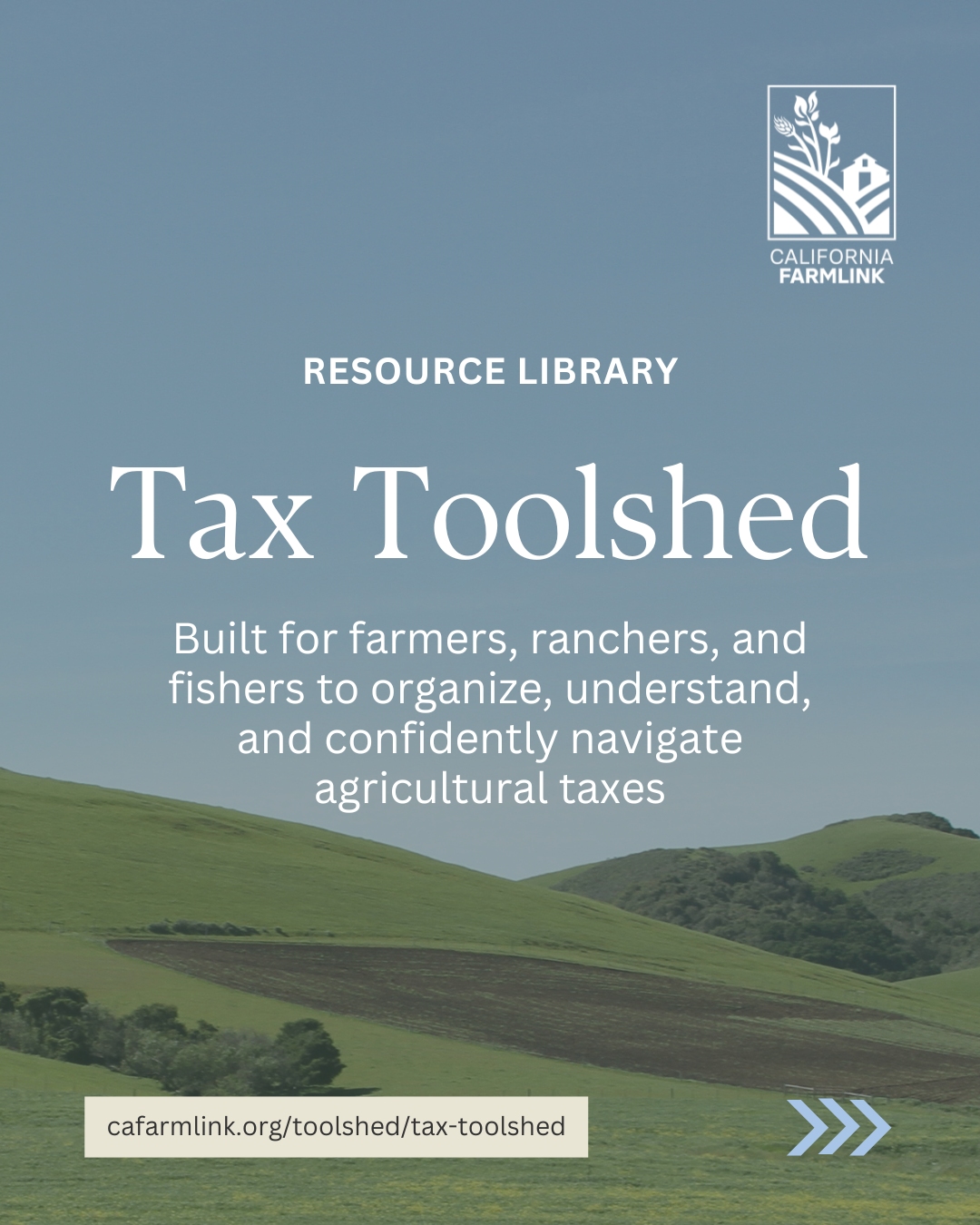
Tax season can feel overwhelming, but you don’t have to navigate it alone. The Tax Toolshed is here to help farmers, ranchers, and fishers get organized, prepared, and confident when it comes to filing taxes.
This toolkit helps you gather records, understand your obligations, and work more effectively with tax professionals. It’s especially useful if you’re unsure whether you need to file, have questions about income from federal programs, or live and farm on the same land.
Available in English and Spanish, the Tax Toolshed includes:
- Diagnostic tools to pinpoint the lessons most relevant to you
- Short, easy-to-follow lessons with videos, slides, and detailed notes
- A best practices guide for choosing and working with a tax preparer
- A tax organizer workbook – ideal for first-time filers or anyone looking for a smoother tax experience
Visit the Tax Toolshed in our Resource Library today.

Supporting local crabbers with low-interest loans for whale-safe gear
California’s Dungeness crab fishery has been hit hard by warming oceans, whale entanglement, and toxic blooms, driven in part by the Pacific’s “warm blob” that rippled down from Alaska more than a decade ago and changed everything. In a recent blog post, Matthew Hess, loan officer, explores how climate-driven changes are reshaping the fishery and economic opportunity for fishers. Warmer waters have shifted whale feeding patterns, increasing the risk of whale entanglement, and prompting new regulations that make crab fishing more unpredictable.
The west coast Dungeness fishery is generally considered to be sustainable, and an important source of income in the fishing community. To avoid future whale entanglements, fishers are testing new ‘pop-up’ gear technologies. But implementing it involves significant costs and operational adjustments. We’re helping ease the transition with conservation loans at 3.5% interest, supporting fishers as they navigate a changing ocean. Learn more here.
.jpg)
Conservation Financing - Now Available Statewide
In 2025, we launched conservation loans in partnership with the Resource Conservation Districts in Monterey and Santa Cruz counties, helping six farmers to access conservation programs like SWEEP, with an average loan of $97,557. We’ve also made conservation loans in four other counties, and we can now offer these 3.5% loans statewide. We welcome the opportunity to partner with additional conservation technical service providers like RCDs.
If you’re implementing a project supported by SWEEP or EQIP and need short-term support with cash flow, our Conservation Bridge Loans may be a good fit. Start with a technical service provider to help define your project, such as irrigation efficiency or cover cropping. Click here for an example of a farmer using a conservation loan, and learn more about our lending here.
Policy Principles, Land Equity, and Climate Resilience
Today’s pressures demand principled leadership. California FarmLink has long been engaged in public policy, and recently we published FarmLink's Policy Principles, developed through in-depth discussion with our program leadership. Reggie Knox writes, “We understand the critical role public policy plays in shaping our food and agricultural systems…The agricultural and financial systems we have today are shaped in large part by public policy decisions.” We welcome you to contact us with your thoughts.
Land equity: Since its early days, FarmLink has worked on land access and tenure, culminating recently with our service on the California Agricultural Land Equity Task Force, organized by the Governor’s Strategic Growth Council. With experience leading our land access and agreement-building programs, FarmLink staffer Liya Schwartzman served as a member of the task force. She valued the process as an opportunity for coalition building. “We really see this process as a springboard,” Liya reflected, “and the beginning of a long-term focus on equitable access…with multiple levers for change.” Learn about the task force and its report here.
Climate resilience: Californians know that increasing impacts from climate change will demand leadership and policy change. Last year the California Department of Food and Agriculture (CDFA) released its draft Climate Resilience Strategy for California Agriculture with opportunities for the state to take action. We provided written comments and feedback rooted in our experiences in lending, technical assistance, and land access. Climate chaos is here to stay. Learn more about CDFA’s plans for climate resilience and FarmLink’s perspective in this blog post.
.png)
Evaluating and Supporting Clients course returns this June
Our "Evaluating and Supporting Farmer, Rancher, and Fisher Clients" course is back this June! Designed for business advisors, accountants, bookkeepers, and other technical service providers working with agricultural and fishing clients, this course equips participants with practical tools to support their clients’ business success. The course has attracted service providers and farm lenders both in California and across the country.
The course will be held on Zoom on Wednesdays, June 3–24, from 12:00–2:00 PM. Participants will expand their understanding of small farm businesses and join a growing referral network connecting business assistance providers with farming, ranching, and fishing clients.
Participants have found the course valuable in strengthening their ability to serve agricultural businesses. One shared: "This course gave me the confidence and resources to better support my farmer clients. The connections I made have been invaluable."
If you or someone you know would benefit from this course, we encourage you to share this opportunity. Fill out the interest form to join the next cohort.
.png)
Conservation and Financial Resilience Survey - Thank you for your feedback!
Each year, we ask a simple but powerful question: How can we better support farmers, ranchers, and fishers? In our most recent survey, we focused on financial resilience and conservation, two pillars of our work. Building resilient businesses requires integrated support across financing, land access, education, and climate-smart solutions.
Survey responses revealed how financial pressures, climate variability, and access to resources intersect, underscoring that resilience depends on both financial opportunity and the ability to invest in conservation. These insights shape how we design programs, deploy capital, and strengthen financial resilience.
Stay tuned as we share key findings and turn clients’ insights into action.
Introducing FarmLink’s Newest Board Members
We’re proud to welcome our newest board members, whose talent, dedication, and shared commitment to our mission will strengthen the work of California FarmLink.
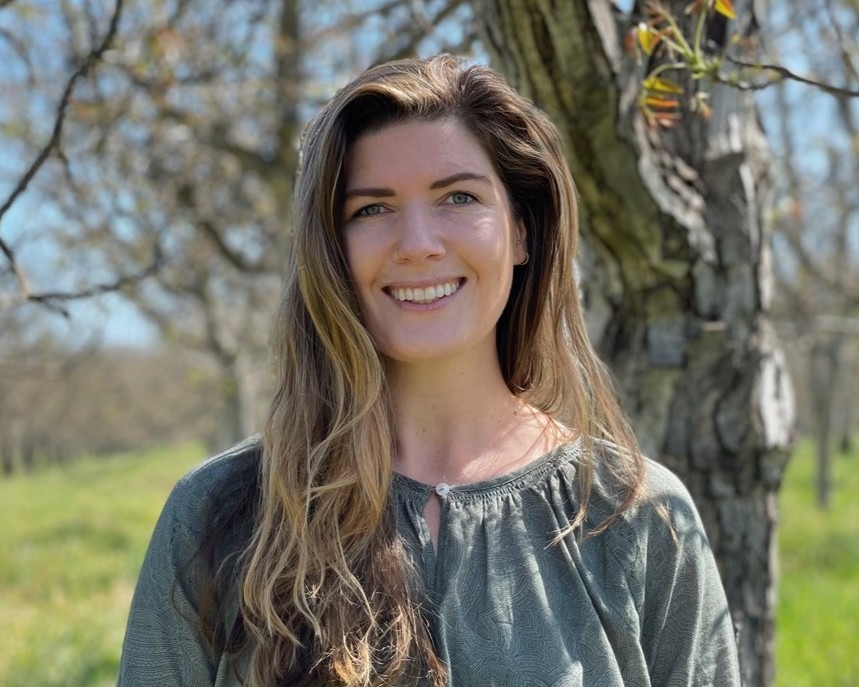
Emily McNamara | Co-Owner of Sierra Orchards
Emily is a second-generation farmer and environmental professional focused on sustainable agriculture. She co-owns Sierra Orchards and serves on the Winters Farm-to-School Board, promoting resilient farms, hands-on learning opportunities, and local food education.
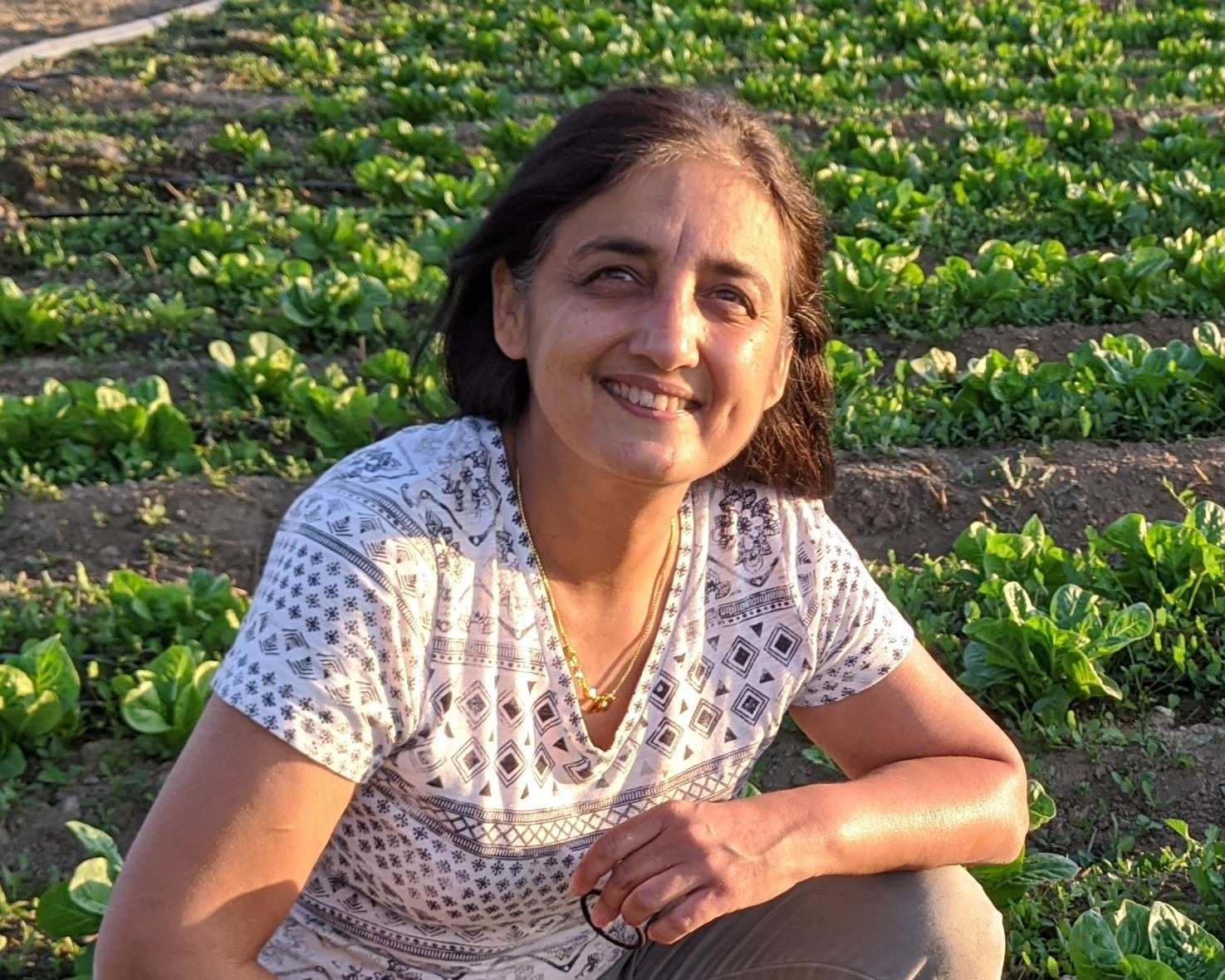
Sheena Vaidyanathan | Founder of Tera Farm
A former Silicon Valley entrepreneur and K–8 computer science teacher, Sheena now focuses full-time on sustainable and organic farming. She is the founder of Tera Farm, a nonprofit connecting consumers with local farmers and providing educational farm experiences.
Meet the staff and board members driving FarmLink’s mission and impact.
%2520(1).png)
Now Hiring
We’re looking for talented individuals who want to make a meaningful impact in California’s agricultural and fishing communities.
Current opening:
- Loan Officer - Hybrid/Remote in Sacramento region
Interested candidates should submit a resume and cover letter highlighting their interest in the role to humanresources@cafarmlink.org with the job title included in the subject line.